

Sunday, November 1, 2026 | Livestock and Agriculture News
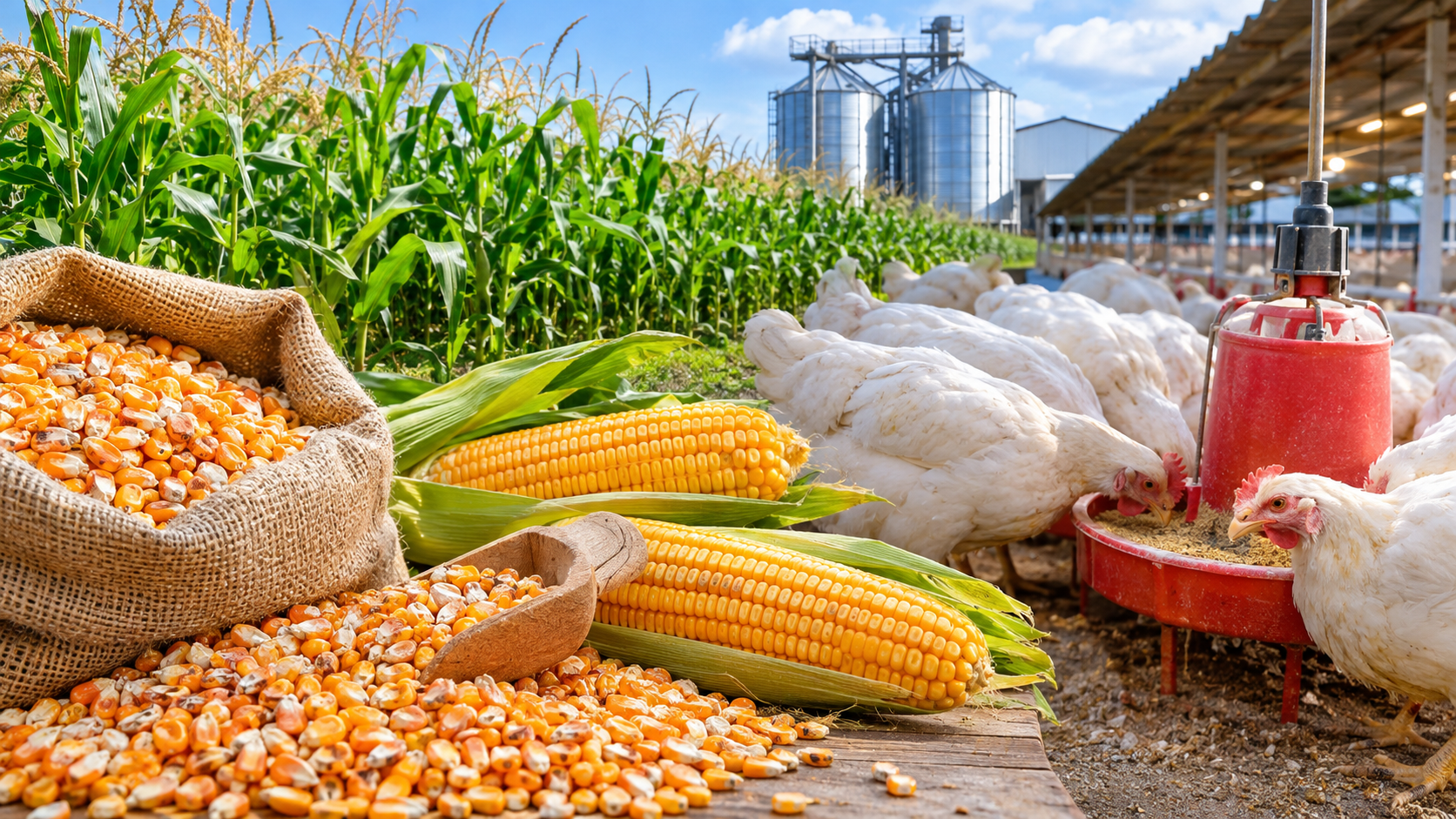
JAKARTA, INDONESIA — The Indonesian government is strengthening the availability of raw materials for animal feed, particularly corn, as part of its efforts to help poultry farmers cope with rising production costs. One of the key initiatives involves a proposed budget of up to IDR 600 billion for corn seed procurement during the 2026–2027 period.
The Ministry of Agriculture has allocated IDR 300 billion for feed corn seed procurement in 2026 and plans to provide an additional IDR 300 billion in 2027. The initiative aims to increase domestic corn production, strengthen national feed supply chains, and reduce financial pressure on small-scale livestock farmers.
Corn Production Target Reaches 2.1 Million Tons
The government is targeting the development of approximately 300,000 hectares of corn cultivation, with an estimated productivity rate of seven tons per hectare. Under this program, total corn production is projected to reach 2.1 million tons.
The additional production is expected to help meet an estimated 1.8 million tons of feed corn demand under the government’s planned supply program.
To ensure that harvested corn is absorbed by the market, Indonesia’s State Logistics Agency, Perum Bulog, is expected to serve as a standby buyer while also managing corn reserves that can be distributed to livestock farmers when needed.
This approach is designed to strengthen market stability, support corn growers, and provide a more reliable supply of feed ingredients for the domestic livestock industry.
Feed Corn Available at IDR 5,000 per Kilogram
Alongside efforts to increase production, the government is continuing its Food Supply and Price Stabilization Program (SPHP) for corn, helping livestock farmers obtain essential feed ingredients at more affordable prices.
According to a Ministry of Agriculture report dated October 26, 2026, poultry farmers participating in the SPHP program in Lampung were able to purchase corn at IDR 5,000 per kilogram.
During the same period, local market prices were reportedly between IDR 8,000 and IDR 8,400 per kilogram, highlighting the potential financial benefits of the government-supported distribution program.
As of October 27, 2026, approximately 216,800 tons of corn had reportedly been distributed nationwide through the SPHP program.
The distribution reached around 11,646 poultry farmers through cooperatives and agricultural associations across 29 Indonesian provinces.
The initiative is expected to support livestock businesses by improving access to affordable feed materials and reducing exposure to fluctuations in domestic corn prices.
Feed Quality and Distribution Remain Key Challenges
Although increasing corn production remains a government priority, the success of the program will also depend on maintaining crop quality, improving post-harvest facilities, and ensuring efficient distribution.
Corn with excessive moisture content can experience deterioration during storage, potentially making it unsuitable for use as an animal feed ingredient.
Proper drying, handling, and storage facilities are therefore essential to maintaining corn quality and minimizing losses throughout the supply chain.
Improving transportation networks and distribution access will also help ensure that corn production incentives deliver meaningful benefits to both agricultural producers and livestock farmers.
Without effective post-harvest management and logistics, increased production alone may not guarantee a stable and affordable supply of feed ingredients.
Positive Outlook for Indonesia’s Livestock Industry
The expansion of domestic corn production, stronger partnerships between corn growers and livestock farmers, and continued SPHP distribution are expected to contribute to a more stable national feed supply.
However, higher corn production does not necessarily translate into an immediate reduction in commercial animal feed prices.
Transportation expenses, raw material quality, processing costs, and the prices of other feed ingredients remain important factors influencing overall livestock production costs.
A coordinated approach involving agricultural production, government procurement, storage infrastructure, and distribution networks is therefore necessary to achieve sustainable improvements in the livestock sector.
Through integrated policies covering the entire supply chain, the Indonesian government aims to strengthen the long-term sustainability of livestock farming, improve the competitiveness of domestic animal production, and reinforce national food security.
The planned corn seed procurement budget for 2026–2027 represents an important step toward achieving these objectives, particularly as the country seeks to maintain reliable feed supplies while supporting farmers and livestock businesses across Indonesia.